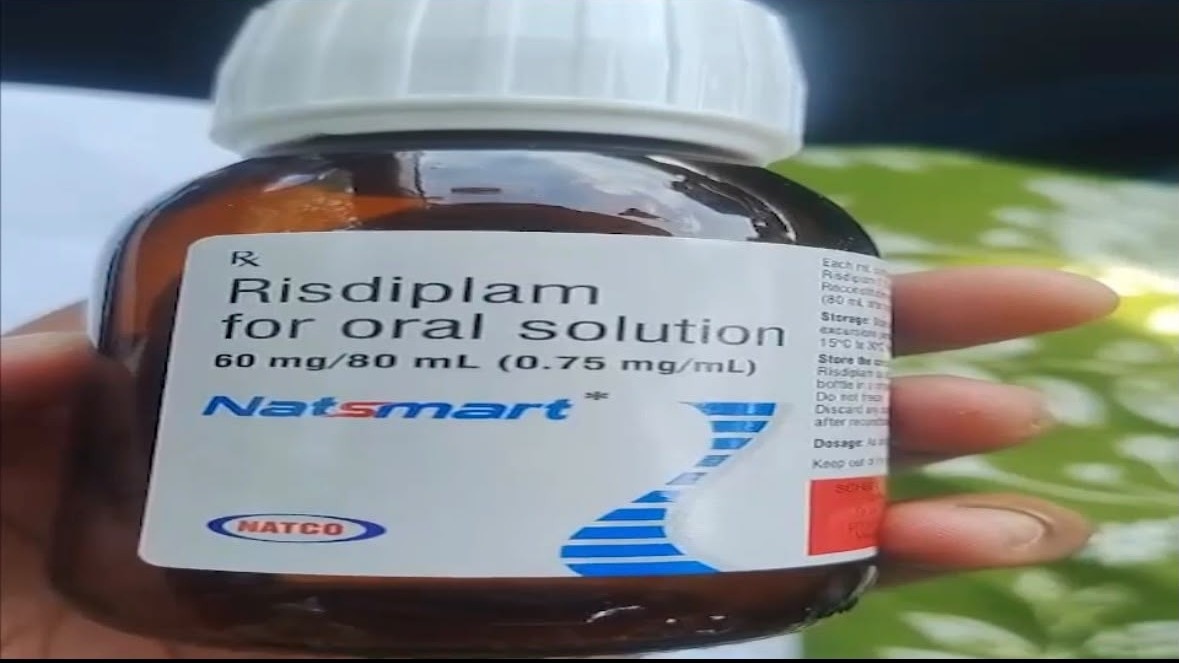
A switch from Roche's Evrysdi to Natco's cheaper Natsmart at a Thiruvananthapuram hospital has left parents of SMA children alarmed and Kerala's flagship rare-disease programme under fire.
Kerala's free treatment scheme for children with spinal muscular atrophy (SMA) is in the middle of a storm. Parents say Sree Avittom Thirunal (SAT) Hospital in Thiruvananthapuram began handing out a generic version of the drug this week in packs marked "Physician Sample" and "For Clinical Trials Only".
The medicine is Natsmart, Natco Pharma's generic risdiplam. It replaces Evrysdi, Roche's original, which the state has supplied to eligible children since 2022. Families now fear their children are being treated with an experimental product, and not the drug they have relied on for years.
The row has opened three questions. Has the generic cleared the regulatory approvals it needs? What evidence shows it works as well as the original (bioequivalence)? And were parents properly told about, and did they consent to, the change? The source report does not settle any of these.
The stakes are high. SMA is a rare genetic disorder that progressively weakens muscles and can be fatal in severe forms. Risdiplam does not cure it. It helps the body make more survival motor neuron protein and can slow progression, and it works best when started early. About 200 children are estimated to benefit from Kerala's programme, the only state-run free SMA therapy in India.
Money explains the switch. The imported drug could cost around Rs 72 lakh a year in the first two years and Rs 56 lakh annually after that. Last year the Delhi High Court allowed Natco to make a generic. Natco priced Natsmart at Rs 15,900 per bottle, nearly 97% below the imported original's price of up to Rs 6.2 lakh per bottle. For a state footing the bill, the saving is huge.
Politics has followed fast. On October 20, Leader of the Opposition and former chief minister Pinarayi Vijayan raised the issue. The programme grew out of the 2022 initiative into the Kerala United Against Rare Diseases (KARE) scheme in 2023, which covers children under 12. Any stumble now hits one of the state's most closely watched public health efforts.
The pressure is now on the state government. It must show that cheaper does not mean riskier, explain what the labels mean, and tell parents clearly what their children are getting. Until it does, the savings from the generic will come with a trust problem.
Related: Mohan Yadav hands out 954 compassionate jobs, promises 20,000 school posts · Revanth Reddy readies Tummidihetti barrage push before Fadnavis talks